
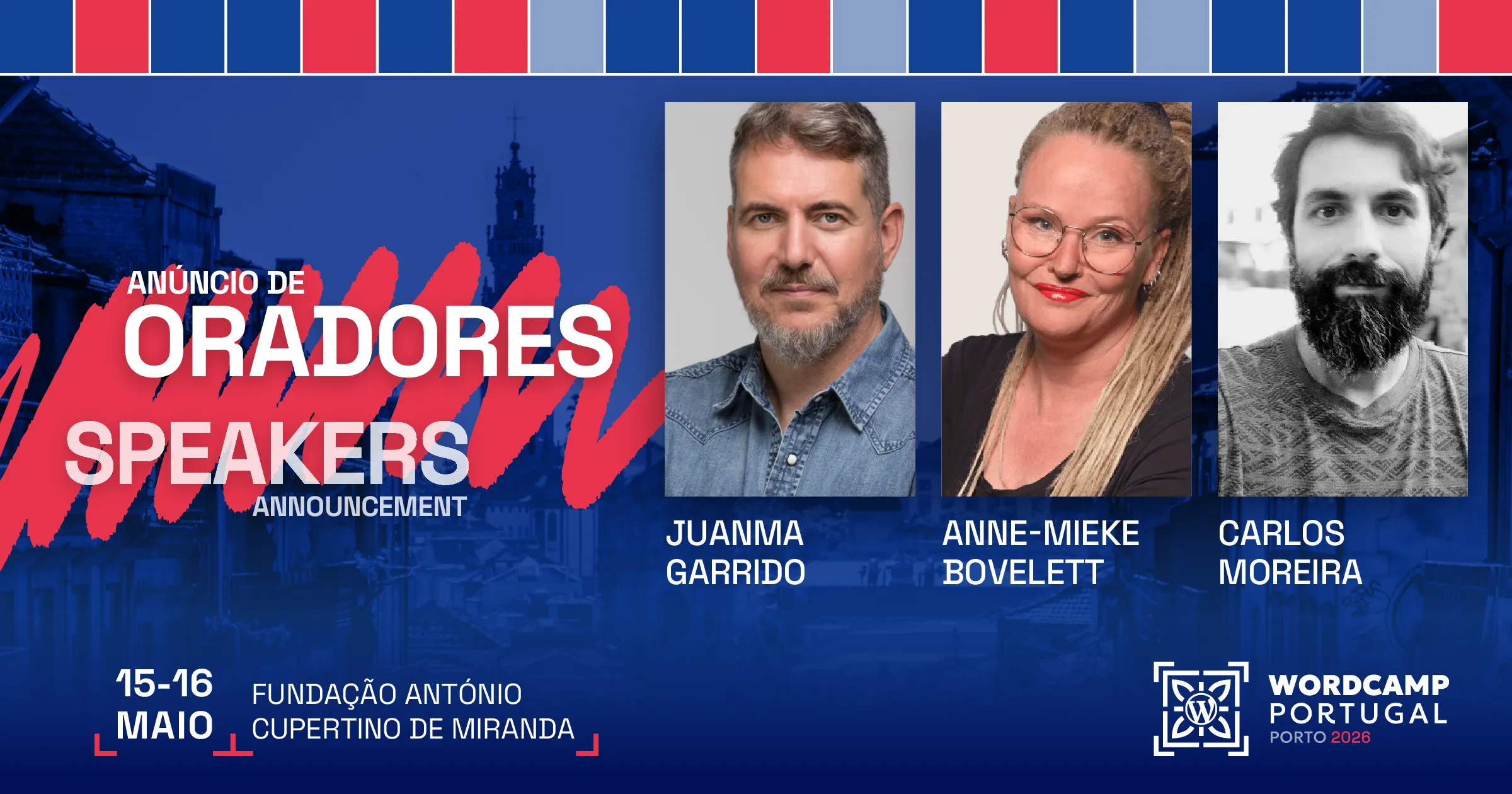
The WordCamp Portugal 2026 lineup continues to grow! Today, we are introducing three speakers who are redefining how we build and optimize for the modern web. From “vibe coding” and AI-driven development to the direct link between accessibility and search visibility, these sessions offer a masterclass in staying ahead of the curve. Let’s dive into the next batch of experts joining us this year!

JuanMa Garrido
JuanMa is a Developer Relations professional at Automattic with over 20 years of experience in JavaScript and WordPress development. A core contributor and documentation leader, he focuses on helping developers adopt the Block Editor. In his talk, “WordPress Development and Management with Claude Code“ JuanMa introduces Claude Code as a command center for site management. He will demonstrate live workflows for generating themes and automating site tasks from the terminal using the Model Context Protocol (MCP) and the Abilities API.

Anne-Mieke Bovelett
Anne-Mieke is an accessibility strategist and mentor who advocates for the WordPress Block Editor as a tool for inclusive design. She bridges the gap between technical requirements and business growth. Her talk, “The SEO visibility hack: Unlocking 23% more traffic through accessibility“ reveals how search engines penalize sites with poor accessibility. Anne-Mieke will introduce the “5-Second Clarity Test” and explain why accessible, well-structured content is essential for both human visitors and AI search agents.

Carlos Moreira
Carlos Moreira is a WordPress enthusiast with 15 years of experience in plugin development and product validation. Based between Porto and Italy, he currently focuses on product engineering and “vibe coding.” His talk, “Vibe Coding com WordPress: Prototipar com IA e REST API“ (“Vibe Coding with WordPress: Prototyping with AI and REST API”), explores how AI tools like Lovable and Bolt can quickly create functional interfaces. Carlos will show how anyone—not just developers—can use AI as a creative partner to turn ideas into prototypes via the REST API.